

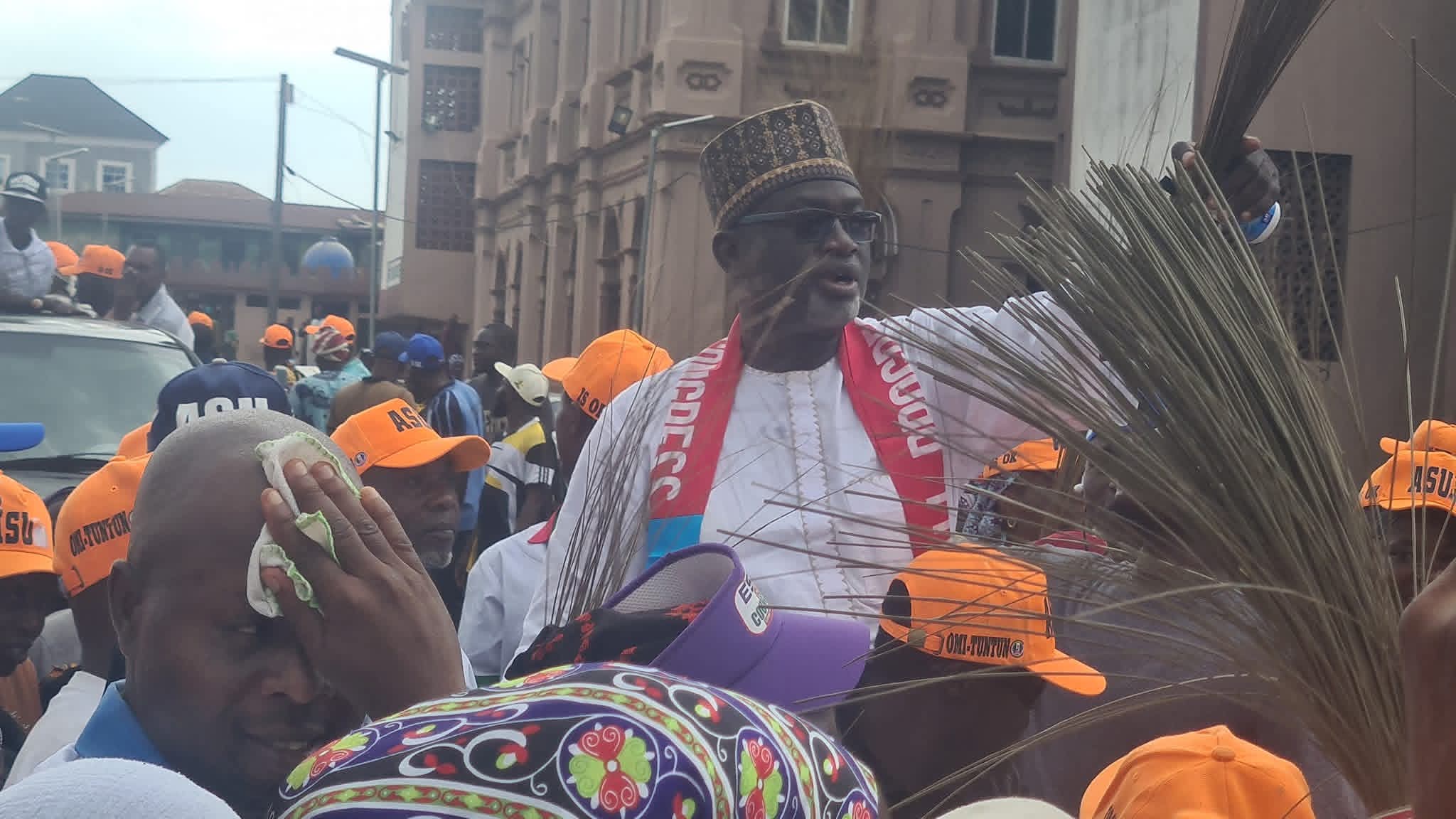
In every political season, narratives will rise, some grounded in fact, others shaped by sentiment or strategy. But for a constituency as enlightened as Ifelodun/Offa/Oyun, judgment must be guided not by the volume of claims, but by verifiable records, balance, and fairness.
For the record, Hon. Abdulwahab Femi Agbaje White is not a newcomer to public service, nor is his journey defined by conjecture. He has, over time, demonstrated a leadership style anchored on character, discipline, consistency, and people-centred governance. These are not abstract ideals; they are reflected in measurable contributions that continue to impact lives across communities.
His public service record speaks in clear terms. From the construction of a hospital for adequate health service delivery to the people of Atari and its environs, to the construction of culverts that improved rural access at Tabernacle in Offa, to enabling employment opportunities for youths, and extending electricity to underserved areas, his footprint is both visible and verifiable. These are not promises; they are outcomes. In governance, that distinction matters, even as a government appointee and not an elective office holder. Among all the critics, if anyone has a comparable record, I challenge them to come forward.
Beyond records and rhetoric, there is a simple but compelling question that demands reflection: if the individuals and stakeholders repeatedly mentioned in past criticisms truly found his character wanting, why do many of them still maintain engagement and political proximity with him? This alone suggests that beyond the noise, there are qualities capacity, relevance, and leadership depth that continue to draw people to him.
Democracy guarantees the right of every individual to aspire. Pursuing political ambition is not a crime; it is a legitimate expression of service and purpose. No aspirant should be condemned for stepping forward. However, what remains unacceptable is the attempt to weaponize narratives, distort perceptions, or blackmail others simply because they cannot match them in a free and fair contest. No one can compel support; it must be earned.
If indeed the allegations being circulated carry weight, then the most democratic and credible path is clear: allow the electorate to decide. Why the urgency to discredit? Why the resort to persistent blackmail? True leadership contests are not won through panic or propaganda, but through confidence in one’s own credibility and connection with the people.
It is also not lost on observers that in every political cycle, there are coordinated efforts, sometimes sponsored, to diminish individuals who command growing acceptance. Yet, history offers perspective: despite waves of criticism and sustained negative campaigns, Bola Ahmed Tinubu still emerged as President. This reinforces a simple truth: blackmail and deliberate derogatory narratives rarely determine electoral outcomes; capacity, structure, and connection with the people do. More often than not, such tactics surface when substance is lacking, and that reality appears to be playing out again.
The people of Ifelodun/Offa/Oyun are discerning. They understand the difference between noise and substance, between allegation and achievement, between politics and governance. What they require is leadership that is steady, inclusive, and grounded in delivery.
As the 2027 elections approach, the conversation must rise above personalities and return to principles track record, credibility, and capacity to serve. On these measures, Hon. Abdulwahab Femi Agbaje White stands on solid ground.
In the end, leadership is not defined by the volume of opposition, but by the weight of impact. And on that scale, the verdict will always belong to the people.









Leave a Reply