

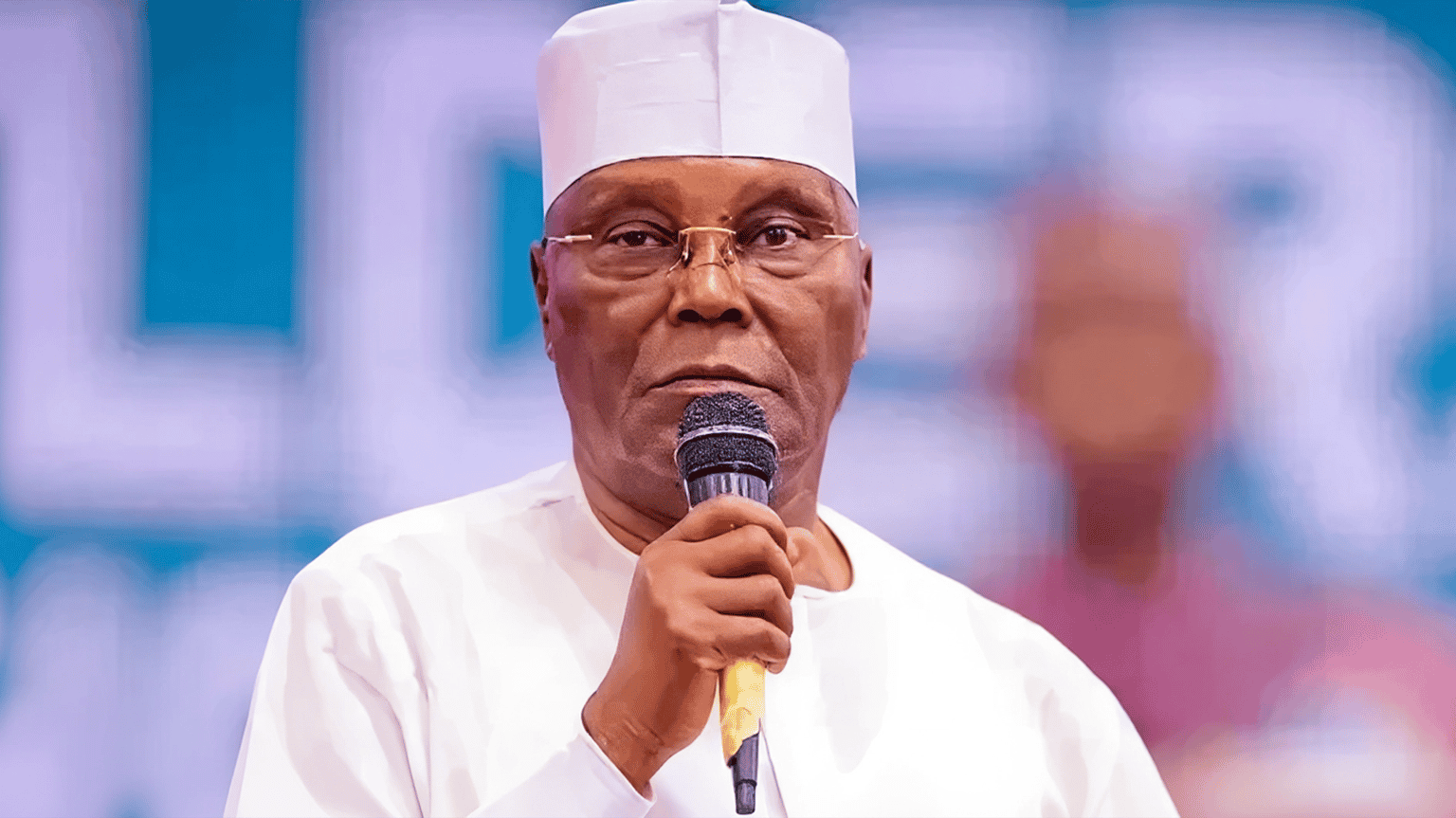
Former Vice President Atiku Abubakar has strongly criticised the Federal Government’s borrowing strategy, warning that it has pushed Nigeria to the brink of economic collapse.
In his New Year message to Nigerians on Wednesday, Atiku described 2025 as one of the most difficult and punishing years in the country’s recent history, blaming what he called poor governance, reckless economic policies, and a lack of empathy under the All Progressives Congress (APC)-led administration.
“Dear Fellow Nigerians, I extend my compliments of the season as we welcome the New Year, 2026. For millions of long-suffering Nigerians, the only consolation is that 2025—one of the most punishing years in our recent history—has come to an end,” Atiku said in a statement posted on his official X handle.
He said the year was characterised by economic hardship, political recklessness, and governance without compassion, accusing the administration of President Bola Tinubu of policy failure and incompetence.
According to Atiku, the Federal Government governed for months without a functional budget while relying heavily on borrowing, a development he said has dangerously weakened the nation’s economy.
“The past year exposed, in stark terms, the incompetence and policy bankruptcy of President Bola Tinubu. Governing for months without a functional budget, the administration relied on propaganda while borrowing recklessly, pushing the nation to the brink of economic collapse,” he said.
The former vice president also condemned what he described as a scandal surrounding a forged tax law, which he said was falsely presented as a reform. He criticised the President’s alleged refusal to allow proper legislative and legal processes to address the controversy.
“Nothing better captures the decay of this government than the scandal of a forged tax law, shamelessly branded a ‘reform’. Any government that begins reform with forgery cannot end with prosperity,” Atiku said.
He further alleged that Nigeria’s democratic foundations were deliberately weakened in 2025, claiming that the APC worked to undermine the country’s multiparty democracy through intimidation, coercion, and state capture.
Atiku also accused the Federal Government of misleading Nigerians by claiming to have met revenue targets while plunging the country deeper into debt.
On security, he lamented what he described as a worsening situation across the country, marked by rising cases of killings, kidnappings, terrorism, and banditry.
“Insecurity worsened dramatically. Kidnappings, abductions, and violent crimes surged, affecting citizens young and old alike. Lives were lost, livelihoods destroyed, and communities terrorised, while government assurances rang hollow,” he said.
The former vice president noted that despite repeated assurances of economic recovery, unemployment, labour unrest, business closures, and hunger dominated the year. He said many industries shut down, workers lost their jobs, and suffering became normalised for millions of Nigerians.
Atiku also criticised the appointment of what he described as unqualified individuals to represent Nigeria abroad, arguing that the country survived the year not because of effective leadership but due to the resilience of its people.
Describing the message as one of the most painful he had ever written, Atiku urged Nigerians to remain steadfast despite what he termed the “callous and soulless policies” of the Tinubu-led government.
He condemned repeated calls on citizens to make sacrifices, arguing that such demands were unjust when leaders live in comfort while the people suffer.
“Sacrifice is patriotic—but it becomes cruel when demanded by leaders who live extravagantly, insulated from the suffering of the people,” he said, adding that leadership without shared pain amounts to exploitation.
Atiku concluded by accusing the administration of arrogance, disregard for public opinion, hostility to criticism, and reckless handling of democratic norms, warning that such attitudes pose a serious threat to Nigeria’s democracy and future stability.







Leave a Reply